
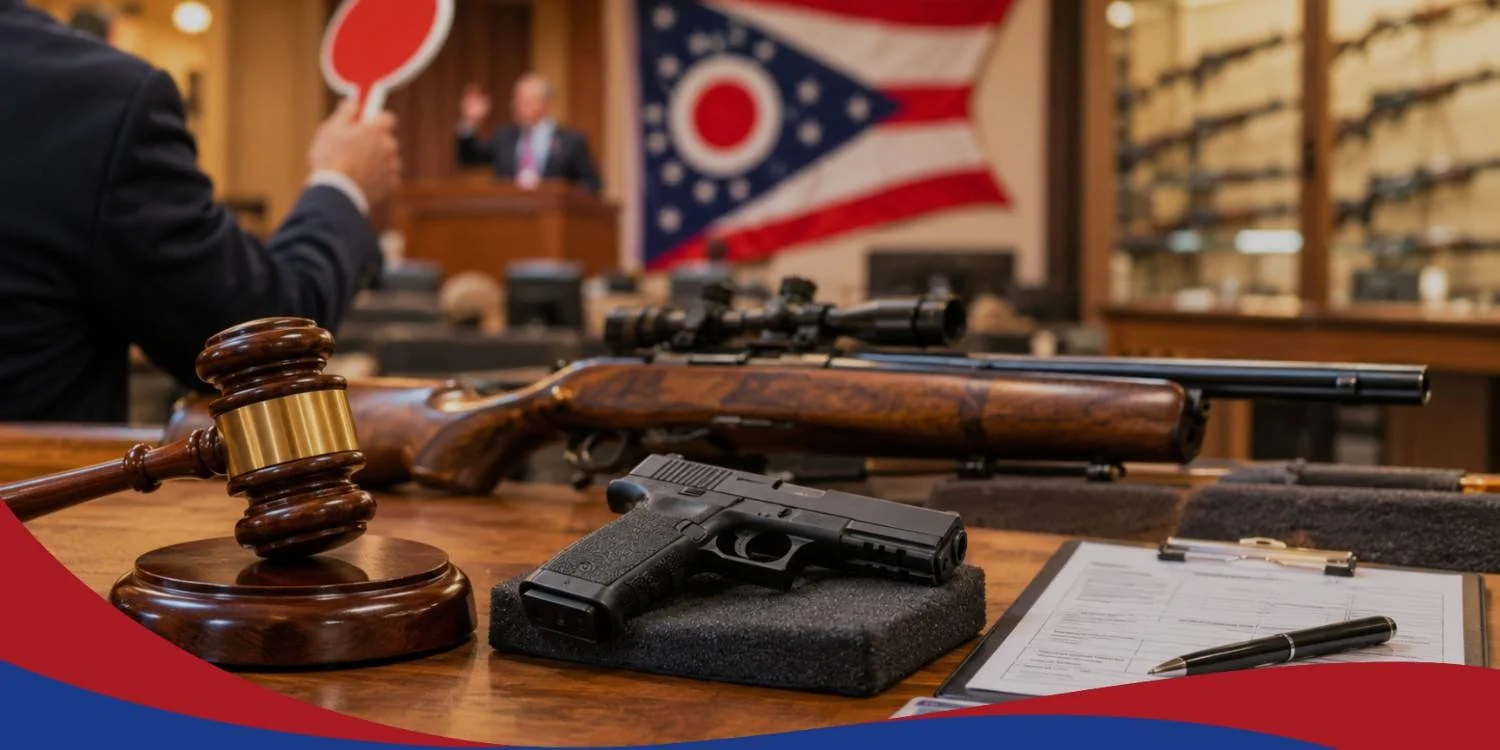
Buying a gun at auction in Ohio can be a smart way to find estate rifles, collectible pieces, and quality used firearms at fair prices. The catch is what comes after the bidding.
Most people know how to raise a paddle. Far fewer know what happens once the auctioneer says “sold,” and that gap is where buyers get stuck.
Here’s the reality: a firearm can’t simply be paid for and carried out the door. Federal law requires a licensed dealer to handle any transfer across state lines, and most professional auction houses run every modern firearm sale through a Federal Firearms Licensee (FFL). That means paperwork, a background check, and a set transfer process before the gun is yours.
This guide walks you through that process from winning bid to pickup, including the fees, ID, and timelines most auction listings skip. It comes from Red Check Auctions, a licensed FFL dealer that regularly handles these transfers for local and out-of-state buyers.
Why Buying a Gun at Auction in Ohio Means Using an FFL Transfer
At a gun shop, the store sets the price. At an auction, whether live, online, or hybrid, the room sets it.
That competition can work in your favor on used, estate, collectible, and surplus firearms, where retail pricing is thin and condition varies from lot to lot. A bidder who has done their homework can sometimes land a quality piece below shelf price.
The legal side is the real difference. The auction house, if it holds an FFL, or a partner dealer must complete the transfer, so you can’t pay and walk away the way you might in some private sales.
An FFL transfer simply means the firearm changes hands through a licensed dealer, who logs it, collects your Form 4473, and runs the NICS background check before releasing it. Whether that dealer is the auction house itself or a partner shop near you, the steps are the same.
Ohio keeps its own rules light: no state purchase permit, no firearm registration, and no waiting period. The federal steps below, though, are not optional.
How the FFL Transfer Works After You Win the Bid: Step by Step
Here’s exactly how the FFL transfer works when buying a gun at auction in Ohio:
- Invoice: The auction house notifies you and sends an invoice: hammer price, plus buyer’s premium (commonly 10–15%), plus Ohio sales tax unless you hold a valid exemption.
- Payment: Most houses release nothing until your payment clears.
- Logging: The firearm is entered into the FFL’s acquisition and disposition (“bound”) book by serial number.
- Transfer method: Ohio residents usually pick up at the auction house or a partner FFL, often the same day or by appointment within a few days. Out-of-state buyers have the firearm shipped to a local FFL of their choice.
- Form 4473: You complete ATF Form 4473 in person, and you must fill it out yourself.
- NICS check: The dealer submits your information to the FBI. Most answers come back within minutes.
- Proceed: You take possession. Ohio has no waiting period once the check clears.
- Delayed or denied: A delay means the FBI needs more time: three business days (up to ten for buyers under 21), after which a dealer may release the firearm at its discretion. A denial ends the transfer, though you can challenge it through the FBI. Some auctions also charge a 20% restocking fee and keep the buyer’s premium if you can’t pass.
Ohio details competitors often leave vague:
- Transfer fees: typically 20-50 per firearm, depending on the dealer.
- ID: a current Ohio driver’s license or state ID showing your current address. The name on your invoice should match it.
- Age: 18 for long guns, 21 for handguns.
Quick tips before you bid:
- Ask the auction house for its transfer hours.
- Bring your ID and payment method to pickup.
- If you’re out of state, send your FFL’s license copy before the auction ends.
Want to see this process in action? Browse upcoming firearm auctions from Red Check Auctions.
FFL Transfers for Ohio Residents vs. Out-of-State Buyers
Where you live changes the path your firearm takes.
|
Aspect |
Ohio resident |
Out-of-state buyer |
|
Handguns |
Complete the 4473 and NICS check on-site or at a partner FFL | Must ship to an FFL in your home state |
|
Long guns |
Same as handguns | Some Ohio houses release long guns on-site to residents of bordering states; otherwise ship to your FFL |
| Timeline | Same day to a few business days |
Often one to four weeks including shipping |
| Extra costs | Transfer fee, sales tax |
Shipping (often 30–60 per gun), your local FFL’s receiving fee, and sometimes no Ohio sales tax on items shipped out of state, so check the terms |
| Your state’s laws | Ohio rules apply |
Your home state’s rules apply, including permits, waiting periods, and restricted items |
Choosing an FFL-licensed auction company from the start makes this smoother, because the dealer already knows who can take what home, and which paperwork you need.
Common Mistakes Ohio Buyers Make (and How to Avoid Them)
These are the mistakes we see most often from people buying guns at auction in Ohio. Most problems happen before the first bid, not after it.
- Bidding without confirming the auction is FFL-licensed: Ask who handles transfers before you register.
- Not having proper ID ready: An expired license or a mismatched address can stall the whole transfer.
- Assuming same-day pickup: Transfer hours and appointment windows vary, so check them first.
- Ignoring fees when setting a max bid: A $500 hammer price with a 15% premium, roughly 7% sales tax, and a $30 transfer fee lands near $645. Build your ceiling backward from your real budget.
- Letting someone else complete the 4473: Buying a firearm for another person is a straw purchase, a serious federal crime. The person paying must be the person who fills out the form and takes the gun home.
What Makes a Good Firearm Auction Experience in Ohio
The best auctions answer your transfer questions before you ever bid. When buying guns at auction in Ohio, look for:
- Clear FFL status and a transfer process explained in the auction terms
- Transparent fees: premium, tax, transfer, and shipping
- Good photos, honest condition notes, and serial numbers
- Preview days so you can inspect lots in person
Red Check Auctions handles estate and collectible firearms with full FFL compliance, from appraisal through transfer, so buyers and families aren’t left to figure out the rules alone.
Frequently Asked Questions
Do I need a permit to buy a gun at auction in Ohio?
No. When buying a gun at auction in Ohio, you don’t need a purchase permit, registration, or owner’s license. You still have to pass the federal NICS background check when you buy through an FFL.
How much does an FFL transfer cost after an Ohio gun auction?
Typically 20–50 per firearm. Out-of-state buyers also pay shipping and their local dealer’s receiving fee, so ask both parties for their numbers before bidding.
Can I pick up my gun the same day I win it?
Often, for Ohio residents, if the check returns “proceed” and the auction offers pickup hours. Some houses use scheduled appointments or multi-day pickup windows, so read the terms.
What happens if my background check is delayed or denied?
A delayed check can resolve within the federal three-business-day window, after which a dealer may choose to release the firearm or keep waiting. A denial stops the transfer, and some auctions charge a restocking fee.
Can out-of-state buyers purchase handguns at Ohio auctions?
Yes, but the handgun must ship to an FFL in your home state, where you complete Form 4473 and the background check before taking it home.
Are antique firearms treated differently?
Yes. Firearms made in or before 1898 are generally exempt from federal FFL and NICS requirements. Many auction houses still require ID and their own internal paperwork, and replicas built for modern ammunition don’t qualify.
Do I have to use the auction house’s FFL, or can I choose my own?
For shipped firearms, you choose. Confirm your dealer accepts transfers and can send the auction a copy of their license. For on-site pickup, the auction’s own FFL handles it.
Ready to Bid with Confidence?
Once you understand the FFL transfer process, buying guns at auction in Ohio is straightforward, and for used, estate, and collectible firearms it is often more rewarding than retail. Know the fees, bring the right ID, and ask how transfers work before you bid.
Browse upcoming firearm auctions from Red Check Auctions, or contact our team with questions about a specific lot or transfer. Thinking about selling instead? Read our guides on appraising an antique gun and selling inherited firearms in Ohio.