
Antique gun appraisal is the process of determining what a historic firearm is genuinely worth in today’s market, based on its condition, rarity, manufacturer, and documented history rather than a guess pulled from an online price chart. If you’ve inherited a Civil War-era revolver, found a Winchester lever-action in a relative’s closet, or are settling an estate that includes several old firearms, the value can range from a few hundred dollars to well into six figures, and the only way to know for sure is a proper evaluation from someone who knows what they’re looking at.
This guide walks through exactly how a professional antique gun appraisal works, what actually moves the number up or down, what it costs, and how to find an appraiser you can trust with something this personal. We’ll also cover how appraisal purposes change the figure you get, because a value for insurance is not the same as a value for an estate sale or an auction estimate.
To get an accurate antique gun appraisal, have the firearm inspected in person by a qualified, FFL-licensed appraiser who examines the metal, wood, mechanical function, and serial number, researches comparable sales, and provides a professional valuation report. Avoid cleaning the gun beforehand. Expect $75–$300 for a single-item appraisal, and confirm upfront whether you need fair market value, insurance replacement value, or an auction estimate, since each produces a different figure.
What Is an Antique Gun Appraisal and Why It Matters
Antique gun appraisal exists to answer one plain question: what would this firearm actually sell for today, to a real buyer, in its current condition? That’s a different question than “what did I read online” or “what did Grandpa say it was worth in 1985.” Values move with the collector market, and a firearm that was worth $600 a decade ago could be worth two or three times that today, or less, depending on demand, rarity, and condition.
An accurate antique firearm appraisal matters most in four situations: insuring a valuable piece against loss or theft, settling an estate where heirs need a fair and defensible number, preparing for a firearm auction where an unrealistic reserve price can kill bidding, and simply satisfying your own curiosity before you decide whether to sell, keep, or pass the gun down.
Under federal law (see the ATF’s definition of an antique firearm), a gun manufactured before 1899, or one using certain obsolete ignition systems, is generally classified as an antique and treated differently than a modern firearm for transfer purposes. That classification affects both how the gun can legally be sold and how it should be appraised.
How Does an Antique Gun Appraisal Work?
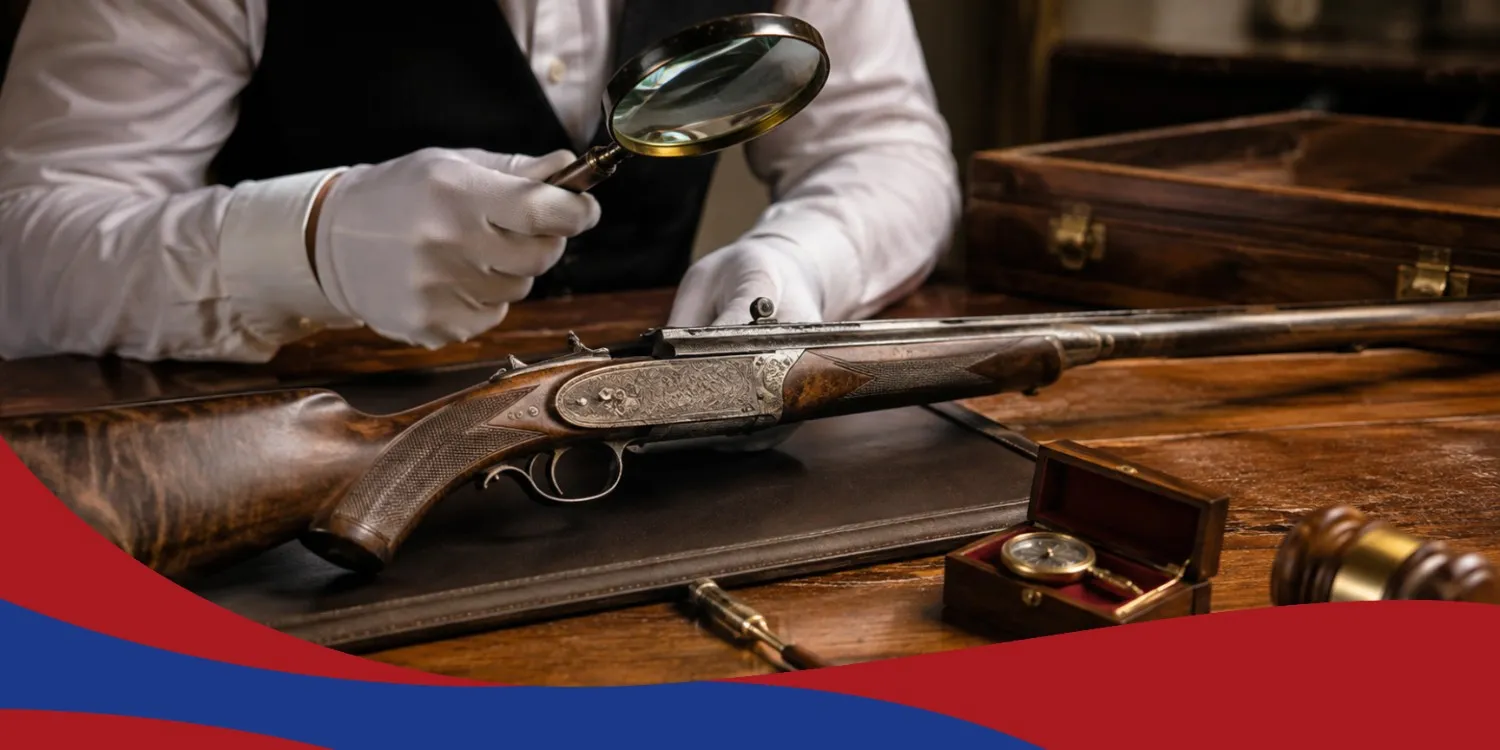
An antique gun appraisal works in three stages: a hands-on physical inspection, research into the firearm’s history and comparable sales, and a written report explaining exactly how the appraiser reached the final figure. A credible appraisal is never a five-minute glance and a number written on a business card it’s a documented process an insurer, attorney, or auction house can actually rely on.
Physical Inspection
The appraiser examines the metal for original finish and pitting, checks the wood for cracks or refinishing, tests mechanical function, and records the serial number, manufacturer markings, and caliber. This is also where gun provenance and any family documentation get noted.
Research & Comparable Sales
The appraiser cross-references the manufacturer and model against recent comparable sales, auction results, and collector-market pricing guides to see what similar firearms, in similar condition, have actually sold for in the past 12–24 months.
Written Appraisal Report
You receive a documented firearm appraisal report with photographs, condition notes, and a concluded value. When a formal appraisal is required for insurance, estate, tax, or legal purposes, ask whether a USPAP-compliant report is appropriate for your specific situation.
Factors That Affect Antique Gun Value
Several factors that affect antique gun value work together, and no single detail tells the whole story. A rare model in rough condition can still be worth less than a common model that’s been perfectly preserved.
Firearm condition and original finish: original bluing, case coloring, and untouched wood are worth far more than a “cleaned up” gun, even one in mechanically better shape.
Manufacturer and model: names like Colt, Winchester, Remington, and Smith & Wesson consistently command stronger prices due to reputation and collector demand.
Serial numbers and matching parts: matching serial numbers across barrel, frame, and cylinder typically raise value; mismatched or altered numbers lower it.
Rarity and production numbers: limited production runs, factory variations, or experimental models often sell at a premium over standard-issue versions.
Gun provenance and firearm history: documented military service, a notable original owner, or a clear chain of custody can meaningfully increase value.
Historical significance: a firearm tied to a specific conflict, era, or regional history often appeals to a wider collector base.
Current collector market demand: like any collectible, antique firearm value shifts with trends, so a fresh appraisal matters even if the gun was appraised years ago.
“One of the most common mistakes we see is a family member cleaning or oiling an old firearm to make it presentable before an appraisal the original condition is worth protecting, not polishing away.”
Fair Market Value, Insurance Value, and Auction Estimate: What’s the Difference?
Antique firearm valuation isn’t a single number it changes based on why you need the appraisal. Understanding this upfront prevents a lot of confusion when two “correct” appraisals on the same gun come back with different figures.
| Value Type | What It Represents | Typically Used For |
| Fair Market Value | What a willing buyer would pay a willing seller today, with neither under pressure | Estate or probate value, IRS/tax filings, general sales |
| Insurance Replacement Value | The cost to replace the item with a comparable one at current retail | Antique gun appraisal for insurance coverage |
| Auction Estimate | A projected price range based on recent comparable auction results | Antique gun appraisal for auction and consignment planning |
How to Get an Antique Gun Appraised: Step-by-Step
Knowing how to get an antique gun appraised correctly protects both the value of the firearm and your own legal standing, since firearm transfers are federally regulated. Follow this sequence rather than skipping straight to a sale.
- Leave the firearm untouched. Don’t clean, oil heavily, disassemble, or refinish it before the appraisal.
- Gather any documentation bills of sale, inheritance papers, military records, or prior appraisals.
- Contact a licensed appraiser with specific antique firearm experience, ideally one who is FFL-licensed to legally handle the transfer if you decide to sell.
- Schedule an in-person inspection. Photo-only “online antique gun appraisal” estimates can give a ballpark, but a hands-on inspection is what produces a defensible number.
- Specify the purpose tell the appraiser whether you need fair market value, insurance replacement value, or an auction estimate.
- Receive your written report and keep it with your estate, insurance, or sale documentation.
How Much Does a Professional Antique Gun Appraisal Cost?
A professional antique gun appraisal for a single firearm generally runs between $75 and $300, depending on rarity, research time, and whether a full written USPAP-compliant report is required. Full collections are often priced per item or on an hourly basis, and a free initial consultation is common before any formal fee is quoted. Be cautious of a flat “we’ll appraise it for free” offer from a buyer, since a truly independent appraisal shouldn’t come from the same party trying to purchase the gun.
DIY Research vs. Professional Antique Firearm Appraisal
Plenty of owners start by searching online before ever calling an appraiser, and that’s a reasonable first step but it has real limits.
| Approach | Best For | Limitation |
| Online research / price guides | Getting a rough ballpark before deciding next steps | Can’t assess condition, originality, or mechanical function firsthand |
| Online antique gun appraisal (photos) | A faster preliminary estimate when travel isn’t possible | Not defensible for insurance, estate, or legal purposes |
| Professional in-person appraisal | Insurance, estate/probate, auction consignment, high-value pieces | Requires scheduling and typically a modest fee |
How to Find a Qualified Antique Gun Appraiser
Finding the right antique gun appraiser is arguably the most important decision in this entire process, since the appraiser’s expertise directly determines how accurate and how defensible your final number is. Look for these signals before you commit:
- Specific experience with antique firearms appraisal, not just general antiques or general real estate
- Federal Firearms License (FFL), which is legally required to handle certain firearm transfers
- Willingness to produce a written, USPAP-compliant appraisal report
- Active involvement in the firearm auction or collector market, not just theoretical pricing-guide knowledge
- Clear communication about which value type (fair market, insurance, or auction estimate) you’re receiving
Antique Gun Appraisal for Insurance, Estate, and Auction Purposes
Antique gun appraisal for insurance protects you against a total loss being underpaid, since most standard homeowners policies cap firearm coverage far below what a rare piece is actually worth. An antique firearm appraisal for estate settlement gives executors and heirs a single, consistent number everyone can work from, which reduces disputes during probate and often feeds directly into a broader estate auction when it’s time to sell the full contents. And an antique gun appraisal for auction gives you a realistic reserve price, so the piece isn’t sold under its true value in front of an audience of collectors who would have paid more.
Why Trust Us
Why trust us with something as personal as a family firearm? Because Red Check Auctions combines federal firearms licensing with decades of hands-on Ohio auction and appraisal experience, which means our valuations reflect what buyers are actually paying in today’s collector market, not an outdated price guide or a number designed to win your business. We’re actively involved in firearm auctions ourselves, and every appraisal we produce is backed by documented comparable sales, in-person inspection, and a written report you can hand to an insurer, attorney, or probate court with confidence.
Frequently Asked Questions
How do I get an antique gun appraised?
You get an antique gun appraised by contacting a licensed firearm appraiser who inspects the piece in person, researches the manufacturer, model, and serial number, checks comparable sales, and issues a written USPAP-compliant report you can use for insurance, estate, or sale purposes.
How much does an antique gun appraisal cost?
A single antique firearm appraisal typically costs between $75 and $300, while full collections are often priced per item or per hour, depending on complexity, documentation needs, and the appraiser’s overall experience level.
How do I determine the value of an antique gun?
Value is determined by comparing condition, originality, rarity, manufacturer reputation, and provenance against recent comparable auction results, then adjusting that baseline for current demand in today’s collector and firearm market.
What determines antique gun value the most?
Original condition and finish typically matter most, followed closely by rarity, manufacturer reputation, documented provenance, and whether serial numbers match across the barrel, frame, and cylinder on multi-part firearms.
Should I clean my antique gun before an appraisal?
No cleaning, refinishing, or polishing an antique firearm before an appraisal almost always lowers its value, because collectors and professional appraisers pay a real premium for original, untouched, unrestored condition.
Is an online antique gun appraisal accurate?
An online antique gun appraisal based on photos can offer a useful rough estimate, but an accurate, legally defensible value for insurance, estate, or sale purposes generally requires an in-person inspection of the metal, wood, and mechanism.
What’s the difference between fair market value and insurance replacement value?
Fair market value reflects what a willing buyer would pay a willing seller today, while insurance replacement value reflects the higher retail cost to replace the item, which is why the same firearm can carry two different appraised figures.
Do I need an appraisal to sell an antique gun at auction?
It isn’t always legally required, but an appraisal before auction gives you a realistic reserve price and prevents an undervalued sale of a firearm that turns out to carry hidden rarity or historical significance.
Final Thoughts
An antique gun appraisal is the difference between guessing what a family firearm is worth and knowing, with documentation to back it up. Condition, originality, manufacturer, provenance, and current collector demand all move the number, which is exactly why an in-person evaluation from a qualified, FFL-licensed appraiser matters more than any online price chart. Whether you need a value for insurance, an estate, or an upcoming auction, getting it right the first time protects both the firearm’s history and its true worth.
If you’re ready to find out exactly what your antique firearm is worth, our licensed team at Red Check Auctions is here to walk you through the process
Ready to Find Out What Your Antique Firearm Is Really Worth?
Get a free, honest consultation from a licensed Ohio appraisal and auction team that’s handled thousands of firearm and estate valuations. Request Your Free Appraisal Consultation