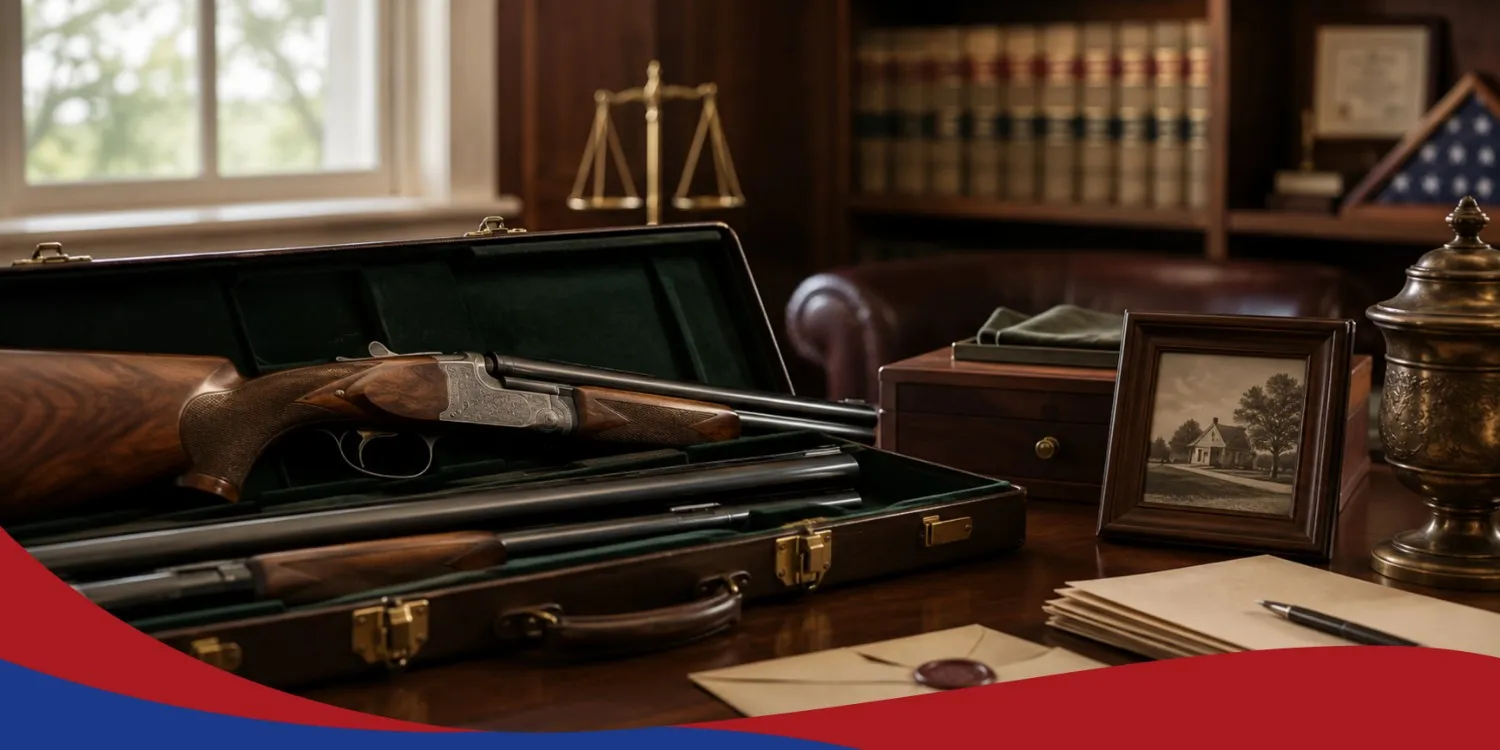
Sell inherited firearms Ohio legally it sounds straightforward, but one wrong move can turn a well-intentioned estate decision into a federal offense. If you’ve recently inherited guns or you’re managing a loved one’s estate, this guide cuts through the confusion and walks you through every step the right way.
The Reality Nobody Talks About
Most families don’t realize that firearms sitting in a deceased relative’s gun safely carry serious legal weight. Ohio gun inheritance laws don’t grant automatic permission to resell, transfer, or auction those weapons however you see fit. Before a single firearm changes hands, you need to understand the rules federal, state, and local that govern what happens next.
Whether you’re an executor, a surviving spouse, or an heir trying to figure out your next move, here’s what you need to know.
Does Ohio Require Paperwork to Inherit a Firearm?
Ohio is one of the more firearm-friendly states. Under Ohio Revised Code § 2923.21, heirs can legally receive firearms through an estate without going through a federal background check as long as the transfer is within immediate family or part of a lawful probate process. However, this does not mean you can sell or transfer the firearm to a third party without following federal law.
Here’s the key distinction:
- Inheriting a firearm Generally permissible without an FFL transfer for direct heirs
- Selling or transferring that firearm to someone outside your family Requires strict compliance with federal and state law
If the estate is going through probate firearm sales in Ohio, the executor has a fiduciary responsibility to handle those assets legally and firearms are no different from real estate or bank accounts in that regard.
Step-by-Step: The Legal Process for Selling Inherited Guns in Ohio
Step 1: Inventory and Document Every Firearm
Before anything else, create a detailed inventory. Record:
- Make, model, and serial number
- Type (handgun, rifle, shotgun)
- Condition
- Any documentation (original receipts, transfer records)
This protects you during the Ohio estate firearms process and provides a paper trail if questions arise later.
Step 2: Check for NFA-Regulated Items
If any firearms in the estate are National Firearms Act (NFA) items short-barreled rifles, suppressors, machine guns, or shotguns the rules change significantly. NFA items must be transferred through ATF Form 5 (tax-exempt for estates) before they can legally move to an heir or buyer. Skipping this step is a federal felony.
Step 3: Work with a Licensed FFL Dealer
This is where most families get it wrong by trying to go it alone. For any sale to a non-family member, an FFL dealer estate firearm transfer in Ohio is not optional, it’s the law.
A Federal Firearms Licensee (FFL) must:
- Run a background check (NICS) on the buyer
- Complete ATF Form 4473
- Maintain records per federal requirements
Trying to sell estate guns in private sales without going through this process even at a garage sale or online marketplace puts you at risk of violating 18 U.S.C. § 922, which carries penalties up to 10 years in federal prison.
Step 4 Decide How to Liquidate
When it comes to how to liquidate firearms from an estate legally, you have a few options:
- Private sale through an FFL: You find a buyer; the FFL handles the transfer
- Consignment with a licensed dealer: The dealer sells on your behalf and takes a commission
- Estate firearm auction: A reputable licensed auction house handles compliance, marketing, and transfer
- Trade-in or direct purchase by a dealer: Fast, but typically lower return
For estates with multiple firearms or high-value collections, a licensed dealer estate firearm sale in Ohio through an auction format typically yields the best market value while keeping everything above board.
Ohio Estate Firearms Auction: What Are the Rules?
Ohio estate firearms auction legal rules mirror federal law closely, but there are nuances. Any auction house conducting firearm sales must be federally licensed as an FFL (Type 01 or Type 02 dealer). The auction process must include:
- Buyer background checks through NICS
- Proper ATF documentation for each firearm sold
- Compliance with state-level restrictions (e.g., buyers must be Ohio legal residents for handguns unless specific exceptions apply)
Reputable auction houses that specialize in estate sales know this process cold it’s what separates professional estate liquidators from casual resellers who could unknowingly put you in legal jeopardy.
What If the Estate Is in Probate?
The probate firearm sales Ohio estate process adds another layer. When firearms are part of a probate estate:
- The executor gains legal control of the firearms as estate assets
- The executor must inventory them as part of the probate filing
- Sales require probate court approval in some circumstances, especially for high-value items
- Net proceeds go back into the estate for distribution to heirs
If you’re an executor unsure about your obligations, consulting a probate attorney familiar with selling firearms after death in Ohio is strongly recommended before taking any action.
Why Trust Us
When it comes to navigating estate gun sales laws in Ohio and FFL requirements, experience matters. Red Check Auctions has built a reputation as a trusted, fully licensed auction partner for families managing estate firearms across Ohio. With a deep understanding of both federal FFL compliance and Ohio-specific estate regulations, Red Check Auctions ensures every firearm is handled, documented, and sold with complete legal integrity giving families peace of mind during an already difficult time.
Frequently Asked Questions
Q: Can I sell inherited firearms in Ohio without going through an FFL dealer?
Sales to non-family members legally require an FFL dealer to handle the background check and paperwork private sales to strangers are a federal risk.
Q: Are there waiting periods for estate firearm sales in Ohio?
Ohio does not have a mandatory waiting period for firearm purchases, but NICS background checks must clear before transfer can be completed legally.
Q: What happens to NFA items like suppressors or machine guns in an Ohio estate?
NFA items must be transferred via ATF Form 5 before any heir takes possession, and any subsequent sale requires additional ATF approval through standard NFA channels.
Q: Does Ohio require a state permit to buy a firearm at an estate auction?
Ohio does not require a firearm purchase permit for most buyers, but all purchasers at licensed auctions must pass a federal NICS background check before taking possession.
Q: Can the executor sell estate firearms before probate closes?
Executors may be able to sell estate firearms before final probate closure with court approval, but the sale proceeds must be properly documented and held as estate assets pending distribution.
Q: What if a firearm in the estate can’t be legally transferred (e.g., it’s unregistered)?
Unregistered NFA items or otherwise illegal firearms must be surrendered to law enforcement or the ATF attempting to sell or transfer them exposes the executor to serious federal criminal liability.
Conclusion: Don’t Leave This to Chance
The legal process for selling inherited guns in Ohio is detailed, but it’s entirely manageable when you follow the right steps. Inventory every firearm, identify any NFA items, work with a licensed FFL dealer or auction house, and when in doubt consult a probate attorney.
Firearms are valuable assets, both financially and often sentimentally. Handling them properly honors the estate and protects everyone involved from unintended legal consequences.
Ready to move forward the right way? If you’re managing an estate with firearms in Ohio and need professional, compliant assistance with the sale or transfer process, reach out to a licensed FFL estate specialist today. You deserve expert guidance and the estate deserves to be settled right.
Reference: https://www.atf.gov/firearms/federal-firearms-licenses