
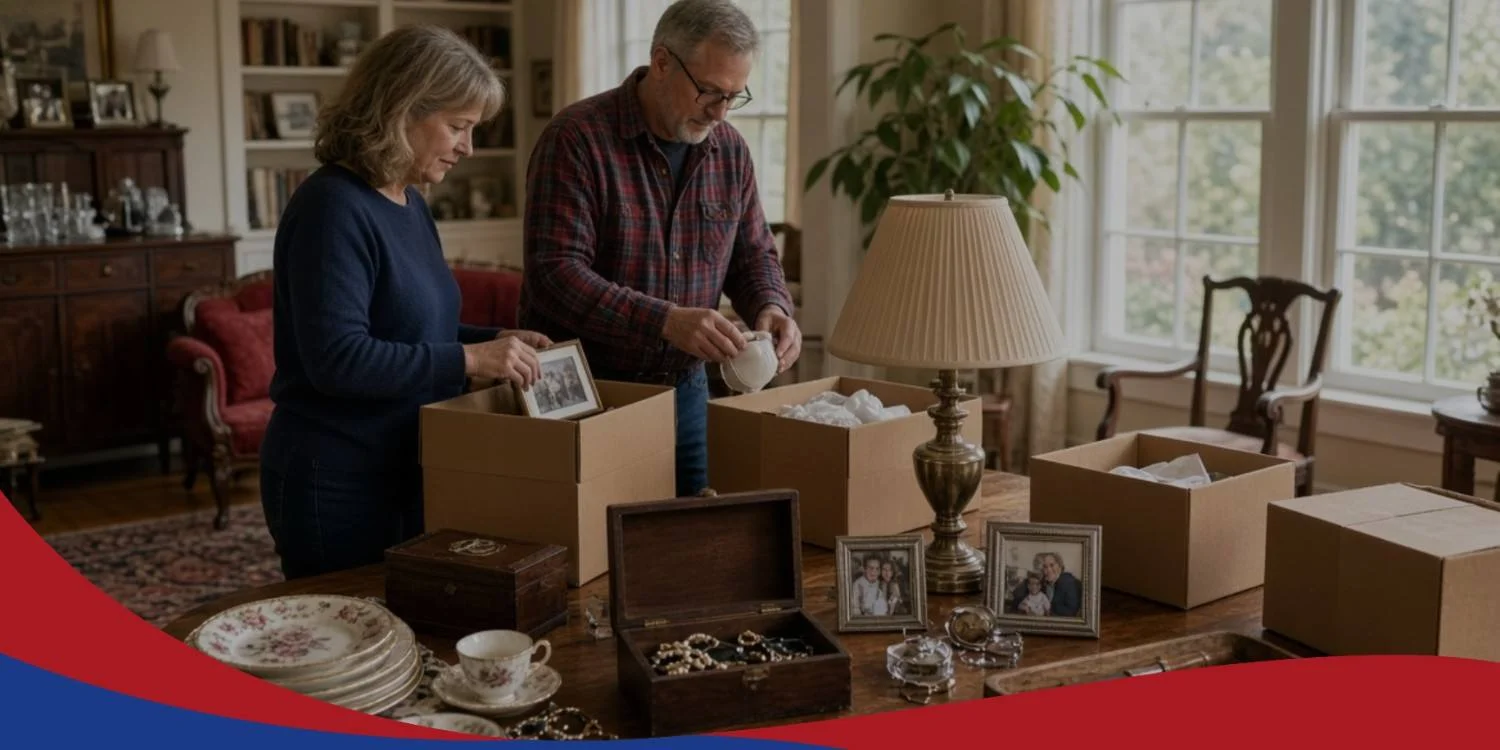
Personal property liquidation feels simple on paper, until you’re standing in a loved one’s garage staring at forty years of belongings and a hard deadline. Keep the pieces that still carry meaning. Donate what still has life left in it. Sell anything that has real market value. And never skip the appraisal step. Follow that order and you protect both the family’s memories and the estate’s bottom line.
What Is Personal Property Liquidation, and When Do You Need It?
Personal property liquidation is the process of converting tangible belongings (furniture, jewelry, art, tools, collectibles, vehicles) into cash or other outcomes. Most people face it after a death, but it also follows a divorce, a downsizing move, or a nursing-home transition. Executors, heirs, and attorneys all deal with it, and each needs a clear plan.
How to Liquidate Personal Property in Five Steps
Knowing how to liquidate personal property in a set order prevents the most expensive mistakes.
- Secure documents and valuables: First, locate wills, deeds, financial records, firearms, and medications.
- Let family choose keepsakes: Separate these items before anyone prices anything.
- Take inventory: Photograph each room and list major pieces.
- Get valuables appraised: Jewelry, art, coins, and antiques deserve a professional opinion before they leave the house.
- Choose a sales method: Compare auction, estate sale, and DIY (table below).
Personal Property Liquidation Checklist: What to Sell From an Estate
Wondering what to sell from an estate? Sellable items are those collectors or bargain hunters will pay for. Here is a quick guide.
|
Item Type |
Best Move |
Why |
| Antiques, art, fine furniture | Sell (auction) |
Competitive bidding lifts prices |
|
Gold, silver, coins, watches |
Sell after appraisal |
Value shifts with metal and collector markets |
|
Vintage tools, firearms, sports memorabilia |
Sell (licensed handling for firearms) |
Strong collector demand |
|
Mid-century furniture, art pottery, art glass |
Sell |
Often worth more than heirs expect |
| Farm tools, barn equipment, vintage signs | Sell (auction) |
Rural collectors and dealers bid actively |
|
Everyday dishes, linens, basic clothing |
Donate |
Low resale value, high usefulness |
|
Photos, letters, heirloom pieces |
Keep |
Sentimental value can’t be replaced |
|
Broken or unsanitary items |
Discard |
Adds cost, not value |
Rule of thumb: if you’re unsure, don’t donate or discard it yet. A dusty lamp or a shoebox of postcards can be exactly what a collector wants.

Sell, Donate, or Keep? A Decision Guide for Personal Property Liquidation
Personal property liquidation gets easier when you ask the same four questions about every item:
- Does a family member truly want it? If yes, keep it, but don’t keep things out of guilt.
- Could it be worth over $100? If yes, get it appraised before choosing.
- Is it clean, working, and useful? If yes, but low value, donate it.
- Does it have no resale or charity value? Then discard or recycle it.
Donation can also help at tax time. The IRS explains how to determine fair market value in Publication 561 on donated property, and you should keep receipts and records.
Estate Liquidation Services Compared: Auction vs. Estate Sale vs. DIY
Estate liquidation services differ mostly in cost, reach, and effort. The ranges below come from published industry sources and vary by market, so always request a written quote.
|
Factor |
Estate Auction | Estate Sale Company | DIY Sale |
|
Typical seller cost |
Roughly 15–25% commission | Roughly 25–50% of gross sales |
No commission, but your time and expenses |
|
Pricing |
Highest bidder sets price | Fixed price tags, haggling |
You set and negotiate |
|
Reach |
Local plus online bidders | Mostly local shoppers |
Limited by your marketing |
|
Best for |
Antiques, art, collectibles | Full-house household contents |
Small estates, extra time |
| Leftovers | Usually minimal | Often remain |
Entirely yours |
Buyers typically pay a separate premium at auction (commonly 10–15%), which is why seller commissions can run lower. Learn more about how estate sales work and how probate can affect who has authority to sell.
Why Trust Us for Personal Property Liquidation in Northwest Ohio
Experience matters when valuables are mixed in with everyday household goods. Red Check Auctions is an estate auction and appraisal company based in Upper Sandusky, Ohio, serving families, executors, attorneys, and collectors across Northwest Ohio, including Wyandot, Hancock, Seneca, Crawford, and Hardin counties. In this part of Ohio, that often means farmhouses with outbuildings, barns full of tools and equipment, and multi-generation homes where decades of belongings share one roof. Our process puts the family first: we walk the property with you, explain what we see, and put every fee in writing before anything is sold. If we think an item is better kept or donated, we’ll say so.
Costly Mistakes to Avoid During Personal Property Liquidation
- Selling before appraising: Rushing a cleanout is the fastest way to give away valuables.
- Mixing estate and personal funds: Executors should deposit proceeds into the estate account, never a personal one.
- Selling to yourself: Executors shouldn’t buy estate items without proper approval.
- Ignoring taxes: Most heirs owe no income tax on personal property sales, but items selling above their stepped-up value may trigger capital gains. See IRS Publication 551 on basis of assets and confirm with a CPA or attorney.
- Skipping written terms: Ask about unsold-lot fees, cleanup, and payout timing upfront.
Our Recommendation: The Best Way to Liquidate Personal Belongings
- Mostly antiques, art, jewelry, or collectibles: choose a professional estate auction service for competitive bidding.
- A full house of mixed household goods: combine auction for valuables with donation for the rest.
- A small estate with time to spare: a DIY sale can work, after an appraisal.
- Tight deadline or out-of-state heirs: hire a full-service team to handle it end to end.
Personal Property Liquidation FAQs
What is the best way to liquidate personal property?
For valuables, a professionally run auction usually brings the best return through competitive bidding. For ordinary household goods, donation or a combined sale often makes more sense.
How do I liquidate personal property after someone dies?
Secure documents, let family select keepsakes, inventory everything, appraise valuables, and then sell or donate the rest. Check with the probate court or an estate attorney first.
What should I sell from an estate?
Sell antiques, art, jewelry, coins, collectibles, vintage tools, and quality furniture. Donate everyday goods, and always appraise anything uncertain before it leaves the home.
Do I have to sell everything in an estate?
No. Liquidation means converting assets as needed to pay debts and distribute the inheritance. Items can be kept, gifted to heirs, or donated if the will allows.
How much do estate liquidation services cost?
Auction houses commonly charge about 15–25% of sales, while estate sale companies often charge 25–50%. Request written quotes and ask about extra fees.
What happens to unsold items?
Unsold items can be donated, consigned, moved to a later auction, or hauled away. Confirm how leftovers are handled in your agreement before signing.
Final Thoughts: Make Personal Property Liquidation Simple
Personal property liquidation doesn’t have to mean rushing, guessing, or giving valuables away. Sort with care, get appraisals, compare your selling options, and put every cost in writing. Done well, you honor your loved one’s belongings and protect the estate’s value.
Ready for Estate Liquidation Help? Talk to a Local Auction Expert Don’t face the sorting alone. Red Check Auctions offers a free, no-obligation consultation to review your property, explain your options, and map out the next step. There’s no pressure and no commitment. Call (614) 205-0442 or request your free, estate consultation today.