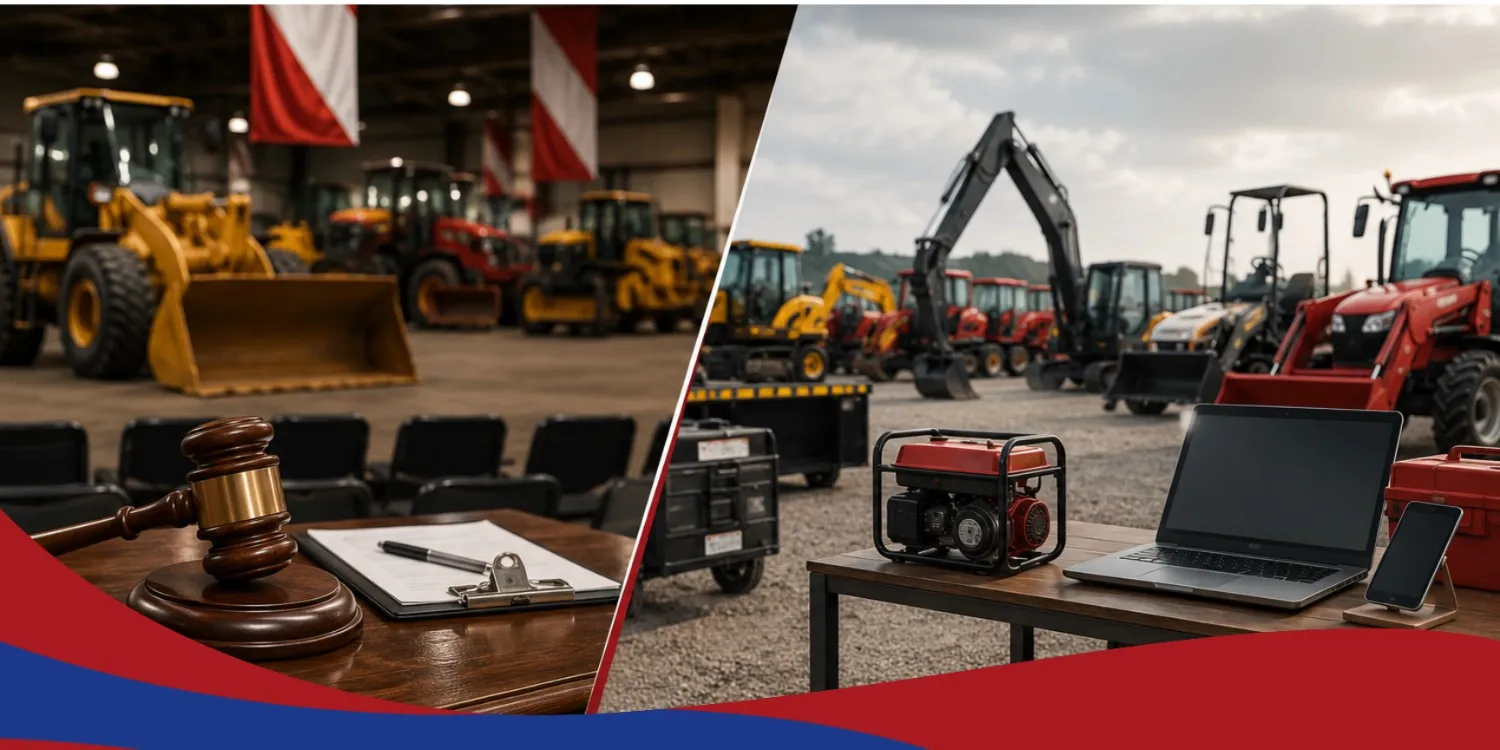
You’ve got a job to finish, a field to plant, or a plant floor to keep running and somewhere out there is the exact piece of equipment you need, sitting on a lot or listed online, waiting for the right buyer. The problem isn’t finding the machinery. It’s figuring out where to buy it without overpaying, getting stuck with a lemon, or waiting three weeks for a seller to finally reply to your message.
That’s the real question behind every “machinery auctions vs marketplaces” search: which one actually gets you a fair deal, fast? This guide breaks it down honestly with no fluff, no recycled advice so you can walk into your next purchase knowing exactly which route fits your situation.
The Machinery Buying Landscape
The machinery market runs on two very different systems, and most buyers don’t realize how much that difference actually costs them.
Equipment marketplaces work like classified listings, a seller names a price, buyers browse and negotiate, and the deal closes whenever both sides agree. There’s no clock, no competition at the moment, and the price is essentially whatever the seller believes the machine is worth.
Machinery auctions flip that model. Equipment goes live for a set window, qualified buyers bid against each other in real time, and the final price is whatever the market is actually willing to pay right now, not what one seller hopes to get. That single difference changes almost everything else: speed, transparency, and how much risk you’re carrying as a buyer.
Understanding this distinction is the first step toward not overpaying for your next excavator, tractor, or forklift.
How Machinery Auctions Actually Work
Forget the image of a fast-talking auctioneer and a room full of strangers. Most online machinery auctions today run entirely through a browser, and the process is more structured than people expect:
- Listing and documentation Equipment is photographed, described in detail, and often paired with hour meters, service records, or third-party inspection reports.
- Registration Buyers verify their identity and, in many cases, financial readiness before they’re allowed to bid.
- Live or timed bidding A window opens (sometimes hours, sometimes days), and registered bidders compete openly. Every bid is visible, so nobody’s guessing what “market price” looks like.
- Reserve vs. no-reserve Reserve auctions have a seller-set floor; no-reserve auctions sell to whoever bids highest, period.
- Closing and settlement The winner pays, arranges pickup or freight, and the deal is done typically within days, not weeks.
This is exactly why used machinery auctions attract buyers who are tired of guessing games. When you can see real bids from real buyers, you’re not relying on a stranger’s word that the price is fair, you’re watching the market prove it in real time.
How Equipment Marketplaces Work
A machinery marketplace is closer to a digital storefront than an auction floor. Sellers post listings often hundreds or thousands at a time and buyers filter, browse, and reach out directly.
The upside is real:
- Massive selection Anyone can list anytime, so inventory tends to be broader than a rotating auction catalog.
- No deadline pressure You can take a week to decide, sleep on an offer, or walk away without losing anything.
- Direct negotiation If you’re good at haggling, a marketplace gives you room to work a seller down.
But the trade-offs matter just as much. On a typical used equipment marketplace, pricing reflects the seller’s expectations, not actual demand which means overpriced listings can sit untouched for months while underpriced gems get snapped up by whoever messages first. You’re also doing all the due-diligence legwork yourself: verifying conditions, chasing down service history, and figuring out whether the number they’re asking is even close to reasonable.
Auction vs Marketplace: The Honest Comparison
|
Factor |
Machinery Auctions |
Equipment Marketplaces |
|
Pricing accuracy |
Set by real competitive bidding |
Set by seller’s guess or hope |
|
Speed to close |
Days, often less |
Can stretch for weeks or months |
|
Negotiation room |
Little to none once bidding starts |
Full negotiation control |
|
Transparency |
Inspection reports, bid history visible |
Varies heavily by seller |
| Inventory breadth | Scheduled batches or rotating catalogs |
Often larger, always-on listings |
|
Buyer effort required |
Lower process is structured |
Higher you drive the negotiation |
If you care most about buying used equipment at a price you can trust, auctions generally win. If flexibility and control over the negotiation matter more to you, a marketplace might be the better fit. Most experienced buyers actually use both more on that below.
Why More Buyers Are Choosing Auctions
The machinery buying habits of contractors, farmers, and fleet managers have been shifting steadily toward auctions, and the reasoning is simple: auctions solve the two biggest fears every used-equipment buyer has, am I overpaying and is this seller being straight with me.
Industrial equipment auctions and heavy equipment auctions in particular have become the default for buyers who want machinery that’s actually been vetted, verified hours, documented maintenance, and a paper trail instead of a phone photo and a vague promise. When several qualified bidders are chasing the same asset, unrealistic pricing gets corrected fast, in both directions.
There’s a time-value piece too. A marketplace negotiation can drag on for days of back-and-forth messaging. An auction has a defined start and end. You know exactly when you’ll have an answer, which is everything when a job site, a harvest, or a production line is waiting on that equipment.
Best Place to Buy Used Machinery: What Actually Matters
Don’t just click the first result when you’re hunting for the best place to buy used machinery. Vet the platform the same way you’d vet the equipment itself:
- Verifiable history Can you see maintenance records, hour meters, or an independent inspection before you bid?
- Clear logistics terms Vague policies on pickup, freight, or payment timing are where hidden costs hide.
- A real track record Look for a platform that actually closes sales, not one with hundreds of stale listings.
- Regional relevance If you’re searching Ohio machinery auctions or Ohio equipment auctions, a platform with genuinely local inventory saves you real money on transport and lets you inspect in person.
- Actual human support When a listing looks off or a bid doesn’t process right, you want someone to call, not a support ticket that vanishes into a queue.
This is precisely where Red Check Auctions stands out for regional buyers. It pairs the transparency of a genuine auction format with visible bidding, documented listings with real knowledge of what used equipment auctions Ohio buyers are actually looking for, rather than a generic national catalog padded with equipment that’s a thousand miles away.
Ohio Machinery and Equipment Auctions: A Regional Reality Check
Ohio’s mix of farmland, manufacturing, and construction activity makes it one of the more active states for equipment turnover which is exactly why Ohio machinery auctions, farm equipment auctions Ohio, and industrial equipment auctions Ohio are searched so consistently. Tractors, combines, skid steers, forklifts, and plant machinery are constantly changing hands as operations scale up, retire equipment, or shut down entirely.
For buyers based in or near Ohio, sourcing locally isn’t just a nice-to-have, it’s a direct line item on your budget. Freighting a piece of heavy equipment across state lines can tack thousands of dollars onto an otherwise fair price. That’s a big reason used equipment auctions Ohio searches skew toward platforms that list genuinely regional inventory instead of national sites where most results are too far away to make financial sense.
Timing matters just as much for agricultural buyers. Equipment has to be ready before planting or harvest, not “sometime soon” and that urgency is exactly what auction formats are built to handle. It’s a major reason interest in farm equipment auctions Ohio has climbed right alongside broader searches for machinery auctions vs marketplaces.
Matching the Format to Your Situation
Not every purchase calls for the same strategy. Here’s a practical way to sort through your machinery buying options:
Choose an auction when you already have a sense of fair market value, want pricing set by real competition, and are ready to move fast once bidding closes.
Choose a marketplace when you’re still researching, want room to negotiate directly, or you’re hunting for a specialized piece of equipment that doesn’t come up in auction rotations often.
Use both when you’re a serious, repeat buyer. Plenty of experienced buyers browse marketplace listings purely for price research, then place their actual bids at auction once they know what fair value really looks like.
Why Trust Us
Buying equipment worth thousands of dollars isn’t a decision you should base on a stranger’s opinion and this guide isn’t one. It’s built around how machinery auctions and marketplaces actually function in practice: the listing process, the bidding mechanics, and the real trade-offs buyers face in markets like Ohio, where local inventory, freight costs, and seasonal timing genuinely change the math. Every recommendation here including the criteria for what makes a platform trustworthy reflects what actually protects buyers: verified listings, visible bidding history, and clear terms, not marketing copy. Red Check Auctions is referenced because it meets that bar, not because it’s the only option out there.
Frequently Asked Questions
What’s the main difference between machinery auctions and equipment marketplaces?
Auctions set prices through competitive bidding within a fixed time window, reflecting real market demand, while marketplaces rely on fixed or negotiable seller-set prices that can sit unsold for weeks if priced unrealistically.
Is it cheaper to buy machinery at auction or through a marketplace?
It depends on the listing, but auctions often produce fairer pricing since multiple bidders compete openly in view of each other, while marketplace prices simply reflect what one seller hopes to receive.
Are online machinery auctions safe for buying used equipment?
Reputable online machinery auctions provide inspection reports, verified seller details, and clear payment terms, which generally makes them safer than unverified private listings offering no documentation or accountability at all.
How do I find Ohio equipment auctions with machinery actually located nearby?
Look for platforms that clearly display equipment location and specialize in regional inventory, since national platforms frequently show listings hundreds of miles outside a practical delivery range for most buyers.
What should I check before bidding on used machinery at auction?
Always review hours, maintenance history, inspection reports, and seller disclosures before bidding, and confirm pickup or shipping terms in advance so nothing surprises you after you’ve already won.
Can I negotiate the price at a machinery auction the way I can on a marketplace?
No, auction prices are determined by competitive bidding rather than direct negotiation, while marketplaces typically allow ongoing back-and-forth offers between buyer and seller before any deal is finalized.
How fast can I actually close a deal at auction compared to a marketplace?
Auctions typically close within days once bidding ends and payment clears, while marketplace deals can stretch for weeks depending on how long negotiation and seller responsiveness take.
Final Thoughts: Making the Right Call
There’s no universal winner in the auction vs marketplace debate. It comes down to what you’re buying, how fast you need it, and how much control you want over the final price. If transparency, speed, and pricing driven by real demand matter most to you, machinery auctions are hard to beat. If you’d rather browse at your own pace and negotiate one-on-one, a marketplace might suit you better.
Ready to see what fair, competitive bidding actually looks like? Red Check Auctions is a solid place to start browsing current listings especially if you’re buying in or around Ohio and want pricing you can genuinely trust. Register as a bidder, watch a live auction close, and see for yourself how much faster and fairer buying used equipment can be when real competition sets the price.
Reference: https://en.wikipedia.org/wiki/Auction?wprov=srpw1_0