
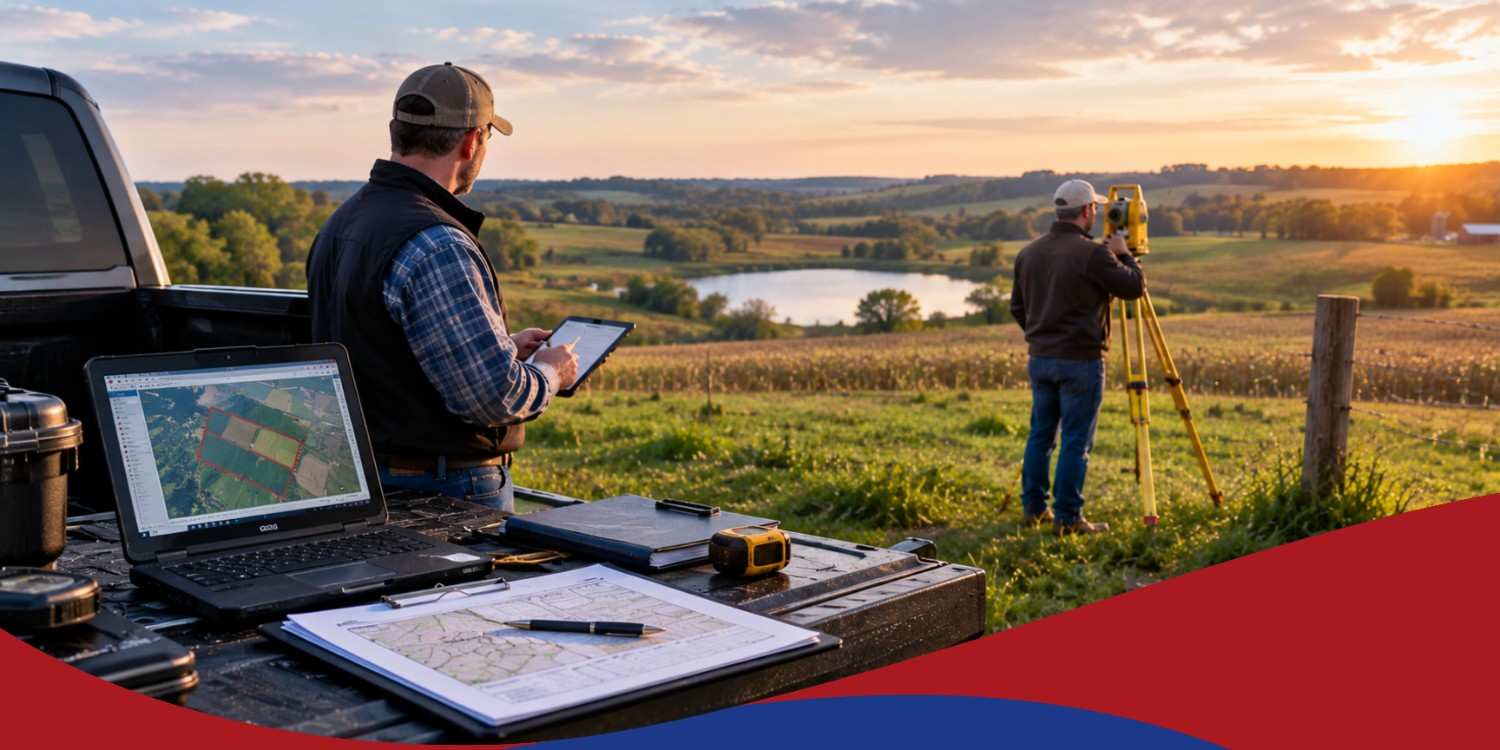
Land appraisers walk your parcel to verify legal access, boundaries, soil and drainage, utilities, topography, flood exposure, and current use. They then compare those findings with recent Ohio sales and zoning rules. Sellers who hand over a survey, tax records, and drainage details before the visit usually get a smoother, better-supported value.
Land appraisers decide what your ground is worth after a few hours of walking, measuring, and asking questions, and for most Ohio sellers that number frames the entire sale. They are not grading how tidy your field looks. They are confirming what a buyer can legally and practically do with the land. Can a truck reach it? Does water leave it? Can a well and septic system go in? Do the boundaries match the deed?
If you are selling an inherited woodlot, retiring from a farm, or clearing a vacant lot near town, this guide covers what happens on inspection day, which factors move your number, and how to prepare. You will also find a decision guide and answers to the questions Ohio sellers ask most.
What Do Land Appraisers Look For During an Inspection?
What do land appraisers look for during an inspection? A land inspection for appraisal is a physical fact-check: the appraiser compares what your documents say with what is actually on the ground.
| Checkpoint | What the appraiser confirms | Why it matters |
| Legal access | Road frontage or a recorded easement | Landlocked ground sells at a steep discount |
| Boundaries | Corner markers, fences, encroachments | Acreage drives price |
| Soil and drainage | Soil type, tile outlets, ponding, erosion | Affects crop yield and buildability |
| Topography | Slope and usable building area | Steep or wet ground shrinks options |
| Utilities | Electric, water, sewer, gas near the lot line | Connection cost lowers value |
| Flood and wetlands | Mapped flood zones, standing water | Restricts what can be built |
| Current use | Cropland, timber, pasture, outbuildings | Income and improvements add value |
In our experience, the biggest surprises for sellers are the things you cannot see from the road: a collapsed drainage tile, an old easement, or a handshake farm lease nobody recorded.
How Land Is Appraised in Ohio: The Land Appraisal Process for Ohio Sellers
How land is appraised in Ohio follows three beats. First comes a meeting about the purpose of the report, plus your deed and survey. Second is the site inspection above. Third is office research: comparable sales, zoning, environmental data, and a written report prepared under the Uniform Standards of Professional Appraisal Practice.
Ohio’s own valuation rule tells you what counts. Ohio Administrative Code 5703-25-11 lists size, shape, topography, soil, drainage, utility connections, road access, zoning, easements, and hazards as facts that influence market value. Land appraisers in Ohio weigh those facts against recent closed sales, and a licensed Ohio property appraiser must support every adjustment in writing. For the math behind that comparison, read how commercial buyers price vacant ground.
What Affects Land Value in Ohio? Factors Land Appraisers Consider in Ohio
What affects land value in Ohio depends on the parcel, but these factors land appraisers consider in Ohio come up again and again:
- Soil quality and CAUV status. Ohio assigns agricultural use values to roughly 3,500 soil types, and the Tax Commissioner sends those values to all 88 county auditors. CAUV generally requires 10 or more acres in commercial agriculture, or $2,500 in gross farm income on smaller tracts.
- Drainage and tile. Flat farm ground lives or dies by working drainage. Buyers discount fields that stay wet.
- Mineral rights. Under Ohio’s Dormant Mineral Act (ORC 5301.56), mineral interests can reunite with the surface after 20 dormant years. Confirm yours with an attorney.
- Access and easements. Shared drives, pipelines, and utility corridors can limit use. An easement stays with the land after sale.
- Highest and best use. Appraisers ask what use is legal, possible, and profitable, a concept known as highest and best use.
- Market timing. Recent nearby sales carry the most weight, so thin rural markets widen the search area.
Vacant Land Appraisal for Sellers in Ohio: Rural Acreage vs. Residential Lots
Vacant land appraisal Ohio sellers need looks different for a 40-acre farm field than for a quarter-acre lot. This table shows where a rural land appraisal Ohio inspection diverges.
| Rural acreage | Vacant residential lot | |
| Main value drivers | Soils, tillable acres, tile, frontage | Utilities, septic or sewer, zoning |
| Inspection focus | Field walk, outlets, fence lines, timber | Lot corners, perc results, water tap |
| Helpful documents | CAUV file, FSA maps, tile maps, lease | Survey, plat, tap fees |
| Biggest seller risk | Unrecorded leases and tile failures | Failed soil tests, shared driveways |
How to Prepare for a Land Appraisal in Ohio: Seller Checklist
How to prepare for a land appraisal in Ohio comes down to handing over proof before the appraiser has to ask:
- Pull your deed, parcel number, and most recent survey.
- Flag boundary corners and clear a walking path to them.
- Gather tile maps, soil reports, CAUV paperwork, and any farm lease.
- List improvements, such as fencing, ponds, and new culverts, with dates.
- Disclose easements, mineral leases, and ditch assessments up front.
- Share recent local sales you know about, without pressuring the number.
- Be on site to answer questions, because owners know details documents miss.
Land Appraisal, Broker Opinion, or Auction? A Decision Guide for Sellers
Your situation decides the right first step for property land appraisal.
| Your situation | Best first step | Why |
| Settling an inherited estate | Formal appraisal | Heirs and probate need a documented number |
| Retiring farmer wanting a firm date | Appraisal, then auction | Bidding sets the price on a deadline |
| Listing with a realtor | Broker opinion, plus appraisal for complex parcels | Fast pricing conversation |
| Lender or court requires a value | State-certified appraisal | Required for acceptance |
Our recommendation: know your number before choosing how to sell. See our guide to selling farmland at auction in Northwest Ohio if a deadline-driven sale appeals to you.
Land Valuation Ohio Sellers Get Wrong: Four Costly Mistakes
- Treating tax value as market value. Learn why an assessed figure and a buyer’s price differ.
- Skipping the survey. Disputed acreage stalls a sale.
- Hiding problems. Appraisers find drainage and access issues, and surprises cost more later.
- Using listing prices as comps. Closed sales matter; asking prices are wishes.
Why Trust Us for Land Appraisal Guidance in Ohio
Red Check Auctions operates from Upper Sandusky and brings more than 30 years of Ohio real estate experience, with NAAA and OAA memberships. We pair market-backed valuation with real buyer reach, so you see what land is worth and what buyers will actually pay. For lender-required reports, hire a state-certified appraiser and verify the license through the Ohio Division of Real Estate. Explore our professional valuation services or the counties we serve.
FAQs About Land Appraisers and Ohio Land Appraisal
What do land appraisers look for during an inspection?
They verify access, boundaries, soil, drainage, topography, utilities, flood exposure, and current use, then document what they see with photos and notes for the written report.
How is vacant land appraised in Ohio?
Appraisers adjust recent comparable land sales for size, zoning, access, utilities, and sale date, then reconcile those figures into one supported opinion of value. A county land value assessment for taxes works differently.
How long does a land appraisal take?
The site visit often takes a few hours, depending on acreage. The written report follows later, and timing depends on parcel complexity and how many comparable sales exist nearby.
Do I need to be present during the inspection?
Presence is not required, but it helps. Owners can point out tile lines, easements, leases, and improvements that documents and a quick walk-through might miss.
Is appraised value the same as county auditor value?
No. Auditors value land for taxation, often using CAUV formulas on farmland, while an appraiser estimates what a willing buyer would pay in today’s market.
What can lower a land appraisal in Ohio?
Poor access, unresolved easements, wet or poorly drained ground, floodplain, and missing documents can all reduce value or make an appraiser cautious in the report.
Can I get my land appraised before selling it at auction?
Yes. Red Check Auctions provides appraisal services for land, farmland, and estate property, and the first consultation is free with no obligation to sell.
Final Thoughts: Walk Into Your Land Inspection Prepared
Land appraisers reward preparation. They verify access, check drainage, read the soil, and measure everything against recent sales. When you arrive with a survey, records, and honest disclosures, the report tends to be stronger and easier to defend.
Ready to learn what your acreage is really worth? Schedule your free consultation or call (614) 205-0442. You can also see how our process works or explore auction options for real estate. Our team will give you straight answers, with no pressure to sell.